






Sober housing offers you a drug- and alcohol-free living environment that bridges intensive treatment and independent living. You’ll find structured support through clear house rules, regular drug testing, curfews, and required participation in recovery meetings. These residences build accountability through peer relationships and shared recovery goals. Research shows residents achieve a 65% abstinence rate at two-year follow-up compared to 31% in control groups. Understanding the different program levels can help you find the right fit.
Definition and Core Purpose of Sober Housing

Sober housing serves as an essential bridge between intensive addiction treatment and independent living, offering structured, drug-free residences where you can strengthen your recovery foundation. These voluntary homes provide alcohol-free environments with clear expectations, including sobriety requirements, household responsibilities, and curfews designed to help you reenter daily life successfully.
The core purpose centers on providing stability during your most vulnerable post-treatment period. You’ll benefit from peer based support that reinforces accountability through drug testing and shared recovery goals. This holistic approach to recovery reduces isolation while building essential life skills like budgeting, cooking, and employment management. Research shows that sober living environments significantly lower relapse risk compared to transitioning directly to independent living.
Unlike inpatient rehab or locked facilities, sober housing offers structured freedom within a supportive community. You’ll develop independence while maintaining the safety net necessary for lasting sobriety. It’s important to note that sober living homes differ from halfway houses, which specifically serve individuals transitioning back into the community after incarceration.
Historical Origins and Evolution of Recovery Residences
Understanding the roots of sober housing helps you appreciate how today’s recovery residences came to be. The earliest structured homes emerged from AA’s 12-step principles in the 1940s, when experienced members converted low-cost urban properties into peer-supported living environments. These early sober houses served as safe islands rising out of neighborhoods where alcohol remained readily accessible. However, the foundation for recovery residences actually began even earlier, with institutions like the YMCA, YWCA, and Salvation Army establishing supportive housing in the 1830s. California later pioneered the social model recovery system in the 1970s, and modern residences have since evolved to offer more flexible admission pathways while maintaining their foundation of community accountability and mutual support.
Early AA-Rooted Homes
When Alcoholics Anonymous first took shape in Akron and New York during the mid-1930s, its founders didn’t set out to create housing, they created community. Dr. Bob’s home became a living recovery laboratory where you’d find meetings, mentorship, and refuge under one roof. Located at 855 Ardmore Avenue in Akron, Ohio, this site would later be designated a National Historic Landmark for its central role in establishing AA. This early residential structure proved that peer connection and stable environments were essential for lasting sobriety. These pioneering efforts recognized that social support plays a vital role in achieving successful long-term recovery.
These informal arrangements established core practices you’ll still recognize today:
- Strict abstinence as a non-negotiable requirement
- Mutual aid and service to fellow members
- Spiritual growth through the 12 Steps
- Regular AA fellowship activities and meeting attendance
- Shared daily living that reinforced recovery principles
California’s Pioneering Model
While AA’s early homes established the spiritual and social foundation for recovery housing, California’s unique historical circumstances pushed the model into new territory. When state psychiatric hospitals closed in the late 1940s and 1950s, you’d find communities scrambling to address a growing housing gap for individuals struggling with substance use disorders.
California responded by developing the social model approach in the 1970s, emphasizing peer support and community-based care. The state’s Department of Alcohol and Drug Programs championed statewide practice standards that other regions would later emulate. Unlike halfway houses, sober living houses maintained financial independence through resident fees rather than state funding, allowing for greater flexibility in operations. This evolution built upon the original halfway house concept from the 18th century, which was designed to offer therapy, support, and rehabilitation to those in need.
Organizations like the Sober Living Network and CAARR emerged to guarantee houses monitored health and safety while maintaining the peer-driven philosophy. These associations verified that residents received authentic 12-step involvement and quality support. You’ll recognize this framework as the blueprint for modern recovery housing nationwide.
Modern Admission Flexibility
Today’s recovery residences offer admission pathways that would’ve seemed unimaginable to early pioneers. You’ll find personalized assessment criteria that evaluate your unique situation rather than applying rigid, one-size-fits-all requirements.
Modern facilities have developed flexible admission guidelines that meet you where you are in your recovery journey:
- Application processes paired with personal interviews assess your readiness
- Some models like CSTL require you’ve commenced a prior recovery program
- Levels of support are codified to match your specific needs
- Voluntary certification guarantees quality without creating unnecessary barriers
- Standards create family-like environments emphasizing peer accountability
These approaches recognize that your path to recovery isn’t identical to anyone else’s. You’re evaluated as an individual, with residences working to remove you from destructive environments while building supportive new social networks. Research has studied outcomes across different models, including freestanding houses and those affiliated with outpatient treatment programs, demonstrating the diversity of admission pathways available today. These residences may also be known by various names including Oxford House, sober home, or halfway house, reflecting the evolution of terminology across different regions and time periods.
Common House Rules and Expectations for Residents
When you enter a sober living home, you’ll commit to zero-tolerance sobriety policies that require complete abstinence from alcohol and illicit substances, along with regular drug testing to support your ongoing recovery. You’re also expected to follow daily responsibilities like maintaining a structured schedule, adhering to curfews based on your program phase, and participating in household chores and recovery activities. New residents typically start with earlier curfew times and earn later privileges as they progress in their recovery. Most homes also require mandatory attendance at recovery meetings, such as 12-step programs or group therapy sessions, to strengthen your commitment to sobriety. These expectations aren’t meant to restrict you, they’re designed to create the stability and accountability you need to build a strong foundation for lasting sobriety.
Zero-Tolerance Sobriety Policies
Because sober housing exists to protect your recovery and the recovery of everyone around you, most homes enforce zero-tolerance sobriety policies that leave no room for ambiguity. These policies apply to alcohol, illicit drugs, and non-prescribed substances, whether you’re on or off the property.
Here’s what you can expect under these frameworks:
- Mandatory drug testing at intake and randomly throughout your stay
- Immediate discharge for use, possession, or test refusal
- Medication disclosure requirements with staff-monitored storage
- Visitor sobriety standards enforced consistently
- Property searches conducted without prior notice
While some programs explore alternative enforcement practices or graduated response policies, research shows strict enforcement correlates with 42% lower relapse rates. These boundaries aren’t punitive, they’re protective measures that help you and your housemates maintain the stability essential for lasting recovery. Residents who test positive for drugs or alcohol may be referred to treatment rather than simply being dismissed, depending on the program’s approach. Additionally, any approved prescription medications must be locked in a safe to prevent misuse and ensure accountability within the household.
Daily Responsibilities and Curfews
Structure defines early recovery, and daily responsibilities in sober housing provide the predictable framework you need to rebuild healthy habits. You’ll follow fixed wake-up times, submit weekly schedules for approval, and maintain engagement in work, school, or active job searching during daytime hours.
Curfews typically run from 11:00 p.m. on weeknights and midnight on weekends, limiting exposure to high-risk situations. You’re expected to stay in the house at least five nights weekly and use check-in procedures when returning. Some houses have electronic device requirements during quiet hours to protect communal rest.
Daily rotating chores, kitchen cleanup, mopping, trash removal, teach accountability. Many programs incorporate nutritional meal planning into structured mealtimes. When you miss responsibilities, consequences follow: fines, additional duties, or privilege loss. This consistency builds the discipline that sustains long-term sobriety. These structured expectations discourage idleness, which is recognized as a common trigger for relapse.
The Four Levels of Sober Living Programs
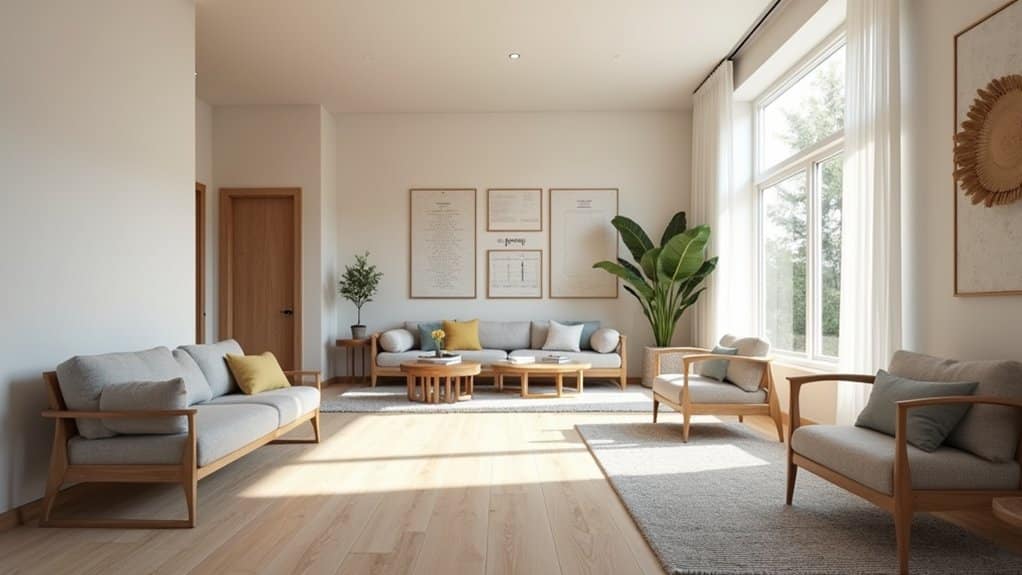
Although sober living homes share a common goal of supporting recovery, they vary considerably in structure, staffing, and services. The National Alliance for Recovery Residences (NARR) defines four distinct levels to help you find the right fit:
- Level 1: Peer-run homes where residents democratically manage operations, emphasizing peer mentorship programs and mutual accountability.
- Level 2: Monitored environments with house managers, mandatory drug testing, and required participation in support groups.
- Level 3: Professionally managed residences offering case management, life skills training, and social integration goals through structured programming.
- Level 4: Service-intensive programs with credentialed clinical staff providing on-site counseling and integrated treatment.
You’ll progress through these levels based on your recovery stability and support needs. Each level builds upon the previous one, creating a continuum from peer support to extensive clinical care.
Daily Structure and Recovery-Focused Routines
When you’re traversing early recovery, a consistent daily schedule becomes one of your most powerful tools for maintaining sobriety. Sober housing programs establish fixed wake-up times, typically between 6:00, 7:30 a.m., to regulate your circadian rhythm and reduce relapse risk.
Your mornings anchor recovery through hygiene routines, meditation, and light exercise, effective stress management techniques that stabilize mood and enhance emotional regulation. Daytime hours focus on therapy sessions, support group meetings, work, and vocational training, giving you purpose and structure.
You’ll share household responsibilities through rotating chore charts, developing accountability and practical life skills. Evenings include group dinners, recreational activities, and reflection time that strengthen sober connections. These routines build the foundation you’ll need for independent, long-term recovery success.
Building Recovery Capital and Life Skills

Because lasting recovery extends far beyond abstinence, you’ll need to build recovery capital, the internal and external resources that sustain your sobriety through life’s challenges. Sober housing environments support all-encompassing recovery planning by developing multiple capital dimensions simultaneously.
Your recovery capital grows through:
- Personal resources: Self-esteem, problem-solving abilities, physical health, and financial stability
- Social capital building: Supportive relationships, peer connections, and community involvement
- Practical life skills: Career development, education access, and transportation navigation
- Emotional wellness: Stress management through yoga, meditation, and holistic therapies
- Community connections: Access to mutual-aid groups, recovery organizations, and sober social activities
Strengths-based case management helps you identify existing assets while developing new capabilities. This approach builds resiliency by integrating your personal strengths with professional services and community supports.
Evidence-Based Outcomes and Benefits of Sober Housing
Building recovery capital creates the foundation for lasting sobriety, but you may wonder what measurable outcomes you can expect from sober housing investments.
Research demonstrates compelling resident outcomes across multiple domains. Oxford House residents achieve 65% abstinence rates at two-year follow-up compared to 31% in control groups. Employment rates reach 76% versus 49% in continuing care, with monthly income doubling.
| Outcome Measure | Sober Housing | Traditional Care |
|---|---|---|
| Abstinence Rate | 65% | 31% |
| Employment | 76% | 49% |
| Incarceration | 3% | 9% |
The cost effectiveness proves equally striking. Each Oxford House resident generates a $29,000 net benefit over continuing care, primarily through reduced criminal justice involvement. You’ll also see decreased arrests and healthcare utilization, making sober housing a smart investment in your recovery journey.
Determining If Sober Housing Is the Right Choice for You
Everyone facing the shift from treatment to everyday life must honestly assess whether they’re ready for independent living or need continued support. Intermediate living options like sober housing bridge the gap when returning home poses risks to your recovery.
Consider sober housing if you identify with these situations:
- Your home environment exposes you to triggers from family or friends who use substances
- You need structure, curfews, and accountability to prevent relapse
- You lack life skills for managing employment, finances, and daily responsibilities independently
- You’ve completed treatment but aren’t ready for solo living
- You want peer support rather than isolated recovery efforts
Phase appropriate support matches your current recovery stage. Sober housing provides the buffer you need while building independence skills for long-term success.
Frequently Asked Questions
How Much Does Sober Housing Typically Cost per Month?
You’ll typically pay between $500 and $3,000 per month for sober housing, with most homes averaging around $1,500 to $1,750. Your average monthly rent depends on location, amenities, and support level. Shared rooms offer more affordable housing options at $450, $800 monthly, while private rooms range from $1,000 to $2,500. Many facilities include utilities, furnishings, and accountability programming in your monthly fee, making this a cost-effective step in your recovery journey.
Can I Bring My Pet to a Sober Living Home?
Pet policies vary widely among sober living homes, so you’ll need to confirm rules before admission. Many homes restrict pets due to allergies and space, but pet-friendly options do exist. You’ll typically encounter size limits, breed restrictions, and requirements for vaccinations and good behavior. Service animal allowance generally receives broader legal protection than standard pets. Expect pet deposits ($200, $500) and monthly pet rent. Contact facilities directly to find the right fit for you and your companion.
What Happens if I Relapse While Living in Sober Housing?
If you relapse while in sober housing, you’ll face potential consequences that vary by program. Most facilities have program dismissal criteria requiring immediate intervention, and some may require you to leave. However, many houses allow re-entry once you’ve demonstrated renewed commitment to recovery. Don’t lose hope, research shows that staying connected to structured support post-relapse substantially improves your outcomes. Your recovery journey isn’t over; it’s an opportunity to rebuild stronger.
How Long Can I Stay in a Sober Living Residence?
You can typically stay in a sober living residence for 3, 12 months, though many homes allow longer if you’re paying rent and following house rules. Your length of stay depends on your recovery progress, personal goals, and readiness for shift to independent living. Research shows staying at least 90 days, and often 6 months or more, supports better long-term outcomes. Work with staff to determine what timeline best supports your sustained recovery.
Does Insurance Cover the Cost of Sober Housing Programs?
Insurance typically doesn’t cover sober housing because these residences provide supportive environments rather than clinical treatment services. Your insurance coverage levels and policy requirements determine what’s included, so you’ll want to verify directly with your provider. Don’t lose hope, you can explore alternative funding through SAMHSA grants, state programs, Medicaid (depending on your state), or family support. Many residents also use employment income while their insurance covers complementary outpatient treatment services.